
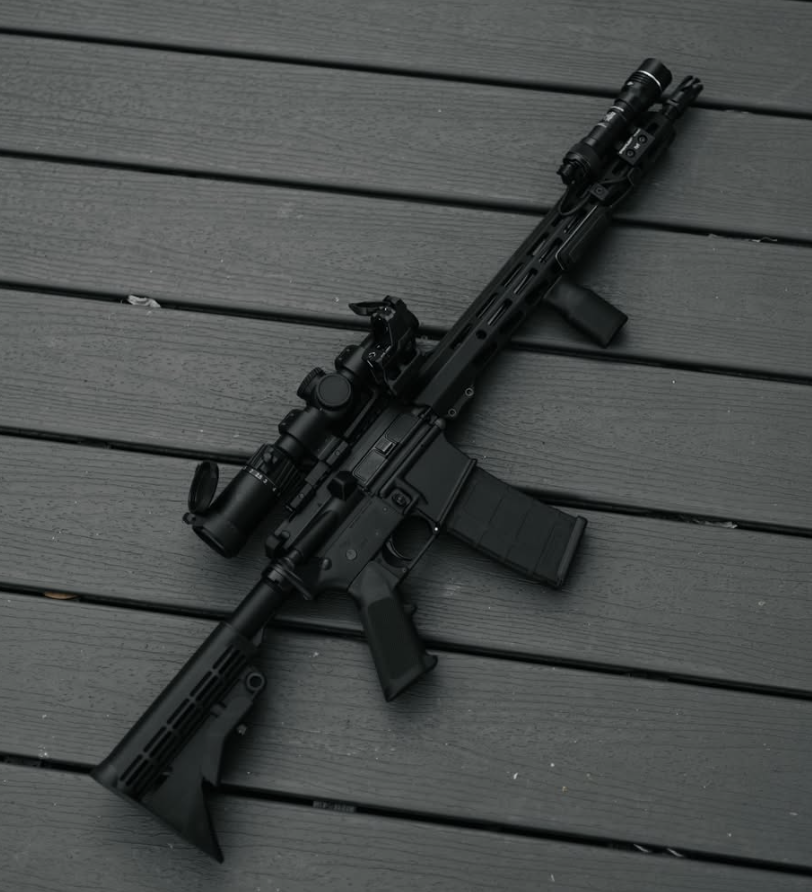
.308 vs. 5.56 Caliber Breakdown
Which Rifle Caliber Is Right for You?
It doesn’t matter if you are building or buying your rifle, caliber is going to be one of the first things you choose. When choosing a rifle caliber, there are plenty of options our there but few debates are as common—or as important—as .308 Winchester vs. 5.56 NATO. Whether you’re building a precision rifle, setting up for home defense, or looking for a versatile all-around platform, understanding the differences between these two calibers will directly impact your performance, cost, and overall shooting experience.
This guide from our team at Next Level Armament breaks down the ballistics, recoil, cost, and real-world applications of each round, and finishes with a strong recommendation for a high-performance .308 rifle platform.
Understanding the Basics: .308 vs. 5.56
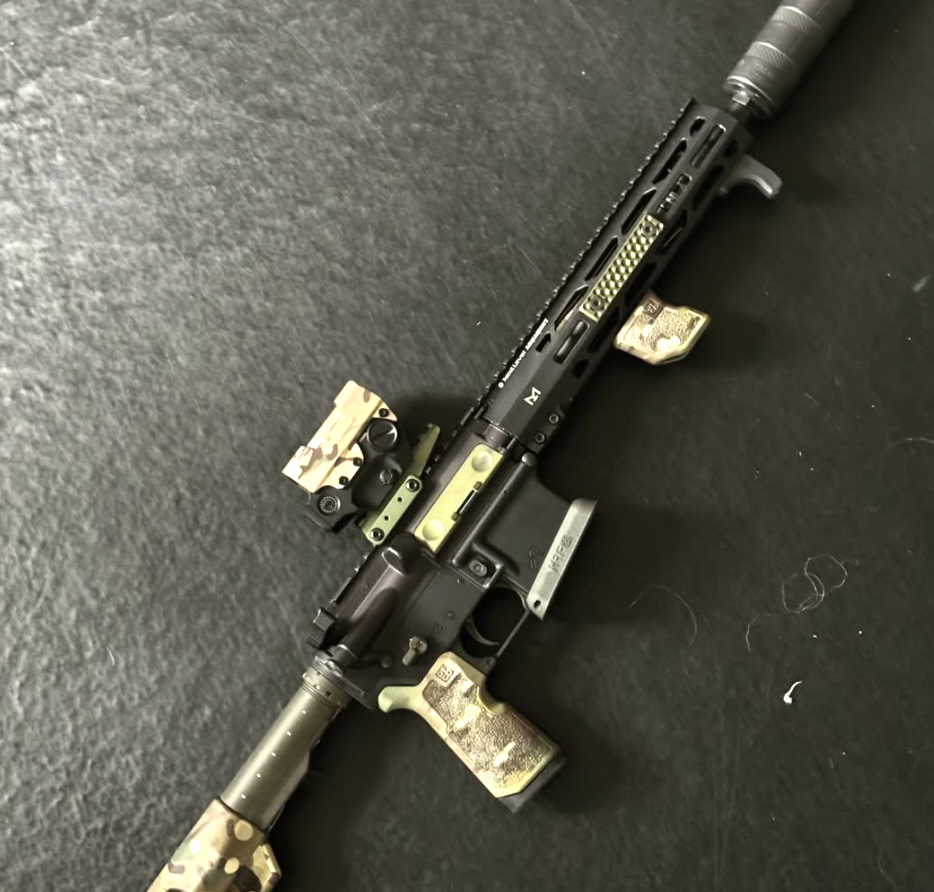
The 5.56 NATO round is the standard for most AR-15 rifles. It’s lightweight, low recoil, and widely used by military and civilian shooters alike, making it found commonly in SBRs and pistols as well.
The .308 Winchester, on the other hand, is a larger, more powerful cartridge typically used in AR-10 platforms and precision rifles. It delivers significantly more energy and range, making it ideal for hunting and long-distance shooting.
At a glance:
- 5.56 NATO: Lightweight, low recoil, high capacity
- .308 Winchester: High power, longer range, greater stopping capability
Ballistics and Performance
Velocity vs. Energy
The 5.56 round typically travels faster—often exceeding 3,000 feet per second depending on the load. However, the .308 compensates with substantially more mass and energy.
- 5.56 NATO: ~1,200–1,300 ft-lbs of energy
- .308 Winchester: ~2,500–2,800 ft-lbs of energy
That’s nearly double the energy, which translates into:
- Better terminal performance
- Greater effectiveness at longer distances
- Improved barrier penetration
Effective Range
If you’re shooting beyond 300 yards, the differences become even more noticeable.
- 5.56 NATO: Effective range ~300–500 yards
- .308 Winchester: Effective range ~800–1,000 yards
The .308 maintains velocity and energy far better over distance, making it the clear choice for precision shooting and hunting.
Recoil and Shootability
Recoil is one of the biggest trade-offs between these calibers.
- 5.56 NATO: Minimal recoil, easy for rapid follow-up shots or upgraded triggers
- .308 Winchester: Noticeably heavier recoil
For newer shooters or those prioritizing speed and control, the 5.56 is easier to handle. However, modern rifle systems have come a long way in managing .308 recoil, especially with improved buffer systems and ergonomics.
Cost and Ammunition Availability
Cost matters—especially if you train often. With ammunition prices rising again, this is something that becomes a big factor for people.
- 5.56 NATO: More affordable and widely available
- .308 Winchester: More expensive per round
If you’re running high round counts for training or range time, 5.56 is the more economical choice. But if your focus is performance over volume, the added cost of .308 can be justified.
Applications: Which One Should You Choose?
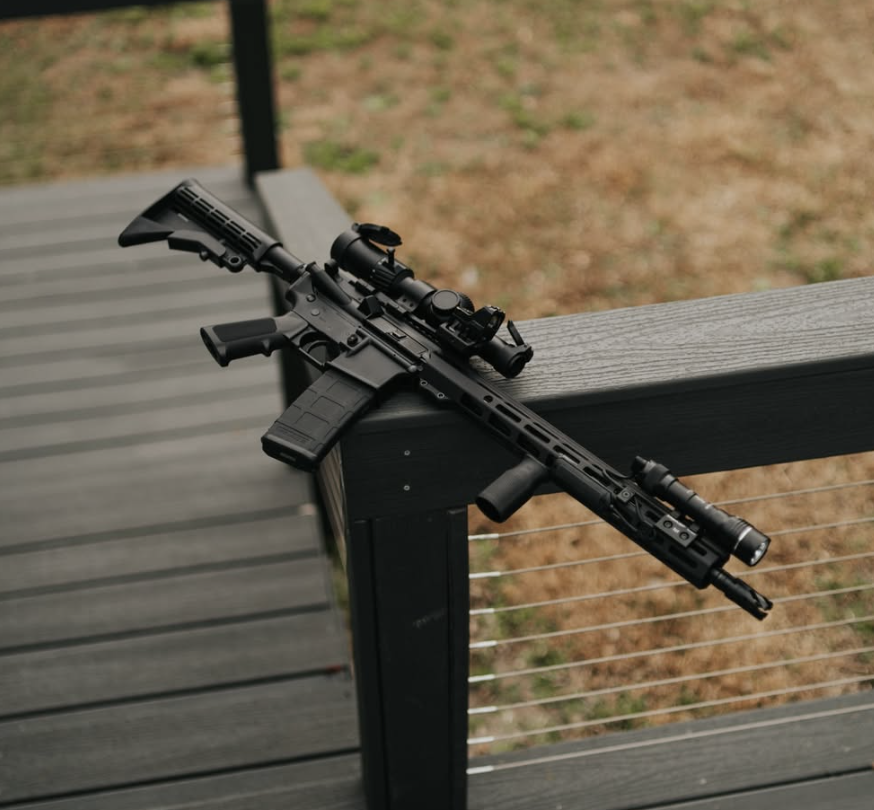
Choose 5.56 if you want:
- A lightweight, maneuverable rifle
- Lower recoil for faster shooting
- Affordable training and high round counts
- Home defense or close-quarters use
Choose .308 if you want:
- Superior stopping power
- Long-range precision capabilities
- Hunting effectiveness for medium-to-large game
- Better performance through barriers
Why .308 Is Gaining Popularity Again
While the AR-15 platform dominates the market, there’s been a noticeable shift back toward large-frame rifles. Shooters are realizing that versatility doesn’t just mean lightweight—it means capability across a wider range of scenarios.
A properly built .308 rifle can:
- Reach distances that 5.56 struggles with
- Deliver more consistent terminal performance
- Serve as both a hunting and defensive platform
The key is finding a rifle that mitigates the traditional downsides of .308—namely recoil, weight, and handling.
Recommended Rifle: Aethon .308 Ambidextrous Rifle

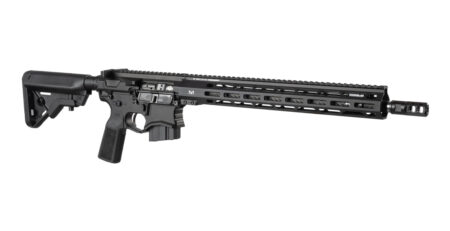
If you’re considering stepping into the .308 platform, the Aethon .308 Ambidextrous Rifle stands out as a top-tier option, whether you shoot righty or lefty. This isn’t just another AR-10—it’s designed as a complete system, built to refine the shooting experience while maintaining the raw power of the .308 cartridge.
What Sets It Apart
1. True Ambidextrous Functionality
Unlike many rifles that offer partial ambi controls, the Aethon is fully ambidextrous. This means:
- Better adaptability for left-handed and right-handed shooters
- Improved efficiency in manipulations
- Enhanced control under stress
- Easy safety selection
2. Smoother Operation
Large-frame rifles are often criticized for being over-gassed or harsh shooting. The Aethon addresses this with a more refined operating system, resulting in:
- Reduced felt recoil
- Smoother cycling
- Better shot-to-shot consistency
3. Enhanced Control
Despite being chambered in .308, the rifle is engineered for balance and handling, helping bridge the gap between AR-15 agility and AR-10 power.
4. Built for Performance
This rifle is designed for shooters who demand more from their platform:
- Precision shooting capability
- Reliable function across conditions
- A system that feels cohesive—not pieced together
Final Thoughts: Power vs. Practicality
The debate between .308 and 5.56 ultimately comes down to your intended use.
- If you prioritize cost, recoil, and speed, 5.56 is hard to beat.
- If you want power, range, and versatility, .308 is the clear winner.
For shooters looking to expand beyond the limitations of the standard AR-15, investing in a well-built .308 rifle like the Aethon .308 Ambidextrous Rifle offers a serious upgrade in capability—without sacrificing control or shootability. But, if you are someone who wants a good starter or range rifle, then 5.56 isn’t a bad caliber to learn the ins and outs of your rifle with, from the charging handle down to the muzzle device.
Be sure to check out Next Level Armament and follow us on Instagram!



Leave a Reply
You must be logged in to post a comment.